What is FastFashion?
Fast fashion is a low-cost and poor-quality imitation of luxury brands and popular designer labels. Fast fashion companies prioritise speed and profit over ethical business practices. The earth can be wrapped in old cloths 9000 times. One next to another, different shapes and colours. We have set a snare for our soul. Plenty of articles are written on the subject. Yet, we are too slow on changing our mindset and taking actions. And I can’t resist on saying it again.
How did Fast Fashion start?
Fast fashion started with the Industrial Revolution. Then we had the standard sizes of S – M – L, and the department store. The ultimate incentive, however, is the shift from natural to synthetic fabrics. That cut the price of the final product in half.
The modern business model has developed in the late 20th century, when some companies have taken the production to the developing countries. Why? For the cheap labour and higher profits.
In the traditional fashion industry, the brands had offered four collections per year, one for each season. They had to guess the trends and demands months before the collection release. Fast fashion offers up to nine times more. And now, with the online reviews and social media, the customer demands are followed and met in matter of two weeks. The manufactures produce bulk of cloths at the most competitive price in line with the latest fashion trends. In other words, a flimsy and naff throwaway. This is the latest trend in ultrafast fashion.
Who is who in the supply and demand chain?
This is the most simplistic definition. Logistics is not our point.
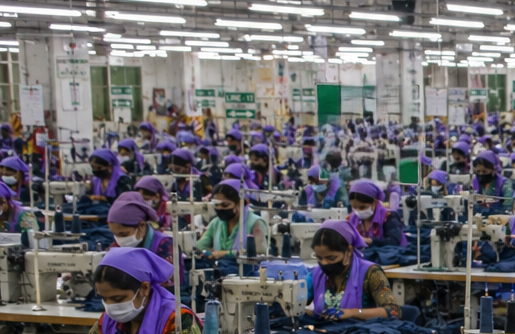
Workers, usually women and often children, work overtime to meet the deadlines and receive wages often below the standard minimum. They glue to a sewing machine for ten to twelve hours, in rooms, big as hangars, without windows or proper air conditions. Manufacturers compromise on the health and safety regulations and building requirements.
I have never read an article on fast fashion without mentioning Rana Plaza in Bangladesh. On the 24th of April 2013 a commercial building with five clothing factories collapses and kills 1134 people, and injuring 2500. Those people went to work and never came back to their families.
So, what makes us, the consumers, to buy those naff throwaways? The human mind is a malleable thing. We follow adverts, influencers, fashion models. With a click of the finger, we could have that special deal or bargain a copy of that special chic designer jacket/dress/outfit. Maybe we do not need it. But we have heard some socialite or influencer boast and brag on their social media profile that this is their one and done thing.
Do we really feel happier of the illusion of high couture? Maybe, for a few hours. Do we believe we look better by copying someone’s style? What do we care how someone looks or dress or thinks?
We only encourage the manufacturers who prioritise speed and profit over the business ethics of accountability and transparency, over the fair treatment of employees, over the positive impact on the environment. A T-shirt with £5 price tag cannot maintain an economic, environmental and social sustainability.
The waste pickers are the people who deal with the textile waste. They work in piles of our discarded cloths, breathe in chemical (some of them toxic) decolourants and dust from the textile shredders. Again, overworked and underpaid. Is it work we want to do?
What is the hidden price?
The process of growing the cotton plant, dyeing the textile, and recycling it consumes water that a human can drink for about two years. The garments made of synthetics can’t biodegrade or decay as the organic matter do. The synthetic fibre production starts from refined petroleum and natural gas to petrochemicals to polyester and nylon and etc. They fragment and release methane gas and toxic chemicals and microplastics. Needless to say, those end up in the land that grow our bread, in the water that we drink, in the air that we breathe.
The world is very generous in waste production. We throw away between 90 and 120 tonnes of old cloths each year. 87% of all that ends in landfills, often in the developing countries. Only 1% of it is recycled globally. The fast fashion production, and the waste from it, has doubled since the turn of the century. What do we think is the prognosis for the next 25 years? Double again, triple?
What are the counterarguments?
Inevitably, each argument has a counterargument. Here, the strongest one is that the fast fashion gives many people a living. This is true. Yet, with the prognosis in mind, more factories should concentrate on recycle and reuse of the discarded textile. Maybe, it is easier said than done. The process still needs water, energy and labour. But the piles of discarded cloths on land and in rivers are neither views to enjoy, nor a legacy to leave to our future generations.
Second, fast fashion advertises its affordable prices and democratic role in fashion styles and trends. Looks like win-win game. In reality, it promotes overconsumption and throwaway culture with minimal regard for natural consequences and business ethics.
What are the solutions?
We need big and fast changes of practices and mindset on all levels. To start with, the national and international bodies must impose stricter regulations on vague advertising, human rights, waste management.
On personal level we can try the capsule wardrobe or be our own influencers. If we really want to play the part of a millionaire, we could host a soiree and donate the cash. Let’s hope they will use it wisely on the waste management.
Fast Fashion proves to be a bottomless pit for human and natural resources. It drives up the societal and personal irresponsibility and overconsumption. A business model advertised as affordable and democratic, it comes at an enormous long-term cost. Let us finish with the old adage. If there is a will, there is a way.
© 2026 Homo Ignoramus. All rights reserved.